Securing AI Agent Transactions: A 2025 Guide to Blockchain for Decentralized Economies
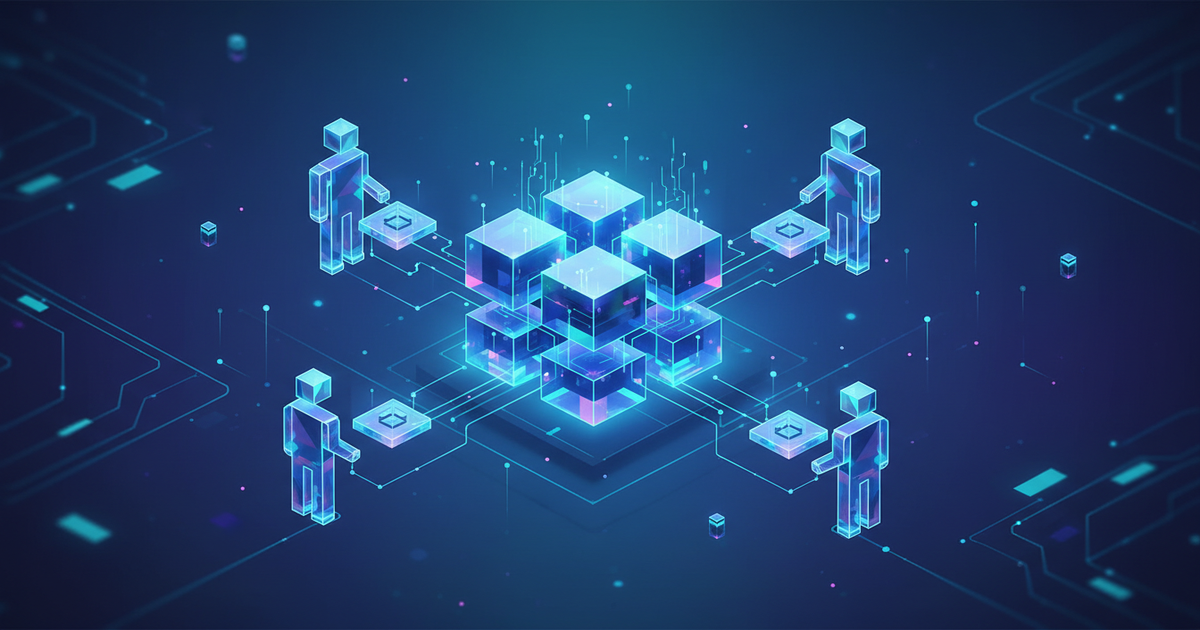
The year is 2025, and artificial intelligence is no longer just a tool; it's an active participant in our economies. From autonomous vehicles negotiating toll fees to AI agents managing complex supply chains or executing financial trades, these intelligent entities are increasingly engaging in independent transactions. But as these decentralized AI economies flourish, a critical question emerges: how do we ensure the security, transparency, and trustworthiness of these AI agent transactions?
Traditional centralized systems, with their single points of failure and susceptibility to manipulation, simply aren't equipped for the scale and autonomy of future AI-driven interactions. This is where blockchain technology steps in. By providing an immutable, transparent, and decentralized ledger, blockchain offers the robust framework necessary to secure the very fabric of our emerging AI agent economies. Let's delve into how you can leverage this powerful synergy.
The Rise of AI Agent Economies: A 2025 Perspective
In 2025, AI agents are evolving beyond simple automation. They are becoming proactive, decision-making entities capable of initiating and completing transactions without direct human oversight. Imagine a smart home AI automatically ordering groceries when supplies run low, or a manufacturing AI negotiating optimal energy prices with a utility provider. These are not distant dreams; they are current realities shaping our economic landscape.
This shift creates unprecedented opportunities for efficiency and innovation, but it also introduces significant challenges. How do you verify the identity of an AI agent? How do you ensure a transaction is legitimate and not tampered with? What happens if an agent malfunctions or is compromised? Without a secure, verifiable backbone, the potential for fraud, disputes, and systemic instability skyrockets.
Actionable Takeaway: Recognize that as AI agents gain transactional autonomy, traditional security paradigms are insufficient. You need a system built for decentralization and trustlessness from the ground up.
Autonomous Agents and Their Financial Footprint
Consider an autonomous logistics network where AI agents manage fleets of delivery drones and self-driving trucks. Each agent might need to pay for charging stations, road usage fees, or even procure spare parts from other agents. These micro-transactions, often occurring at high frequency, demand instantaneous settlement and irrefutable proof of execution. Relying on a centralized server for every single transaction would create bottlenecks and introduce unacceptable latency and risk.
Furthermore, the integrity of the data exchanged during these transactions is paramount. A compromised price negotiation by an AI agent could lead to significant financial losses. Ensuring that the data input, the decision-making process, and the transaction output are all verifiable and tamper-proof is essential for maintaining confidence in these autonomous systems.
Blockchain as the Trust Layer for AI Transactions
Blockchain technology, at its core, is a distributed ledger that records transactions in a way that is secure, transparent, and unchangeable. Each "block" of transactions is linked to the previous one, forming a "chain" that is cryptographically secured. This inherent design makes it an ideal candidate for securing AI agent transactions. When an AI agent initiates a transaction on a blockchain, it's recorded publicly (or semi-publicly, depending on the chain), timestamped, and then verified by a network of participants, not a single authority.
This decentralization eliminates the single point of failure that plagues traditional systems. If one node goes down, the network continues to operate. More importantly, the cryptographic linking of blocks means that once a transaction is recorded, it's virtually impossible to alter or delete it without re-writing the entire chain, which would require immense computational power, making it practically infeasible. This immutability is a game-changer for auditing and accountability in AI economies.
Actionable Takeaway: Embrace blockchain's core principles of immutability and decentralization to build inherently more secure and auditable AI agent systems.
Smart Contracts: The AI Agent's Legal Framework
At the heart of many blockchain applications are smart contracts. These are self-executing contracts with the terms of the agreement directly written into code. They run on the blockchain, automatically executing predefined actions when specific conditions are met, without the need for intermediaries. For AI agents, smart contracts are revolutionary.
Imagine an AI agent needing to purchase cloud computing resources. A smart contract can be deployed that automatically releases payment to the cloud provider's AI agent only when verifiable proof of resource allocation and performance metrics are received. This eliminates disputes and ensures trustless execution.
// Example: Simplified Smart Contract for AI Agent Service Payment
pragma solidity ^0.8.0;

contract AIServiceAgreement {
    address public serviceProvider;
    address public serviceConsumer;
    uint256 public serviceFee;
    bool public serviceDelivered;

    constructor(address _provider, address _consumer, uint256 _fee) {
        serviceProvider = _provider;
        serviceConsumer = _consumer;
        serviceFee = _fee;
        serviceDelivered = false;
    }

    function confirmServiceDelivery() public {
        require(msg.sender == serviceProvider, "Only service provider can confirm delivery.");
        serviceDelivered = true;
    }

    function makePayment() public payable {
        require(msg.sender == serviceConsumer, "Only service consumer can make payment.");
        require(serviceDelivered, "Service not yet delivered.");
        require(msg.value == serviceFee, "Incorrect payment amount.");

        payable(serviceProvider).transfer(msg.value);
    }
}
This pseudocode illustrates how a smart contract can enforce the terms of an agreement, ensuring that payment is only released upon service delivery, all handled autonomously by the network.
Immutable Ledgers and Transaction Integrity
Every transaction an AI agent performs—whether it's sending data, making a payment, or updating a status—is recorded on the blockchain. This creates an unalterable audit trail. If there's a dispute over an AI agent's behavior or a particular transaction, the blockchain provides an indisputable record of events. This level of transparency and integrity is crucial for regulatory compliance and for building public trust in autonomous systems.
Consider an AI-managed energy grid. Transactions involving energy transfer, payment for renewable energy credits, or even micro-grid balancing acts can all be recorded on a blockchain. This ensures that every watt-hour is accounted for, preventing fraud and optimizing resource allocation across the decentralized energy economy.
Key Blockchain Technologies for AI Agents in 2025
While the core principles of blockchain remain vital, the technology is rapidly evolving to meet the demands of sophisticated AI agent interactions. Several advancements are particularly relevant for securing decentralized AI economies.
Actionable Takeaway: Stay informed about the latest blockchain innovations to equip your AI agents with cutting-edge security and efficiency features.
Layer 2 Solutions for Scalability
Early blockchains often struggled with scalability, processing a limited number of transactions per second. This bottleneck made them less suitable for the high-frequency, low-latency transactions AI agents require. However, Layer 2 solutions like Optimistic Rollups and ZK-Rollups have dramatically improved throughput. These technologies process transactions off the main chain, bundling them into a single transaction that is then settled on the Layer 1 blockchain, significantly reducing costs and increasing speed.
For AI agents managing micro-payments or real-time data exchanges, Layer 2 solutions are indispensable. They enable the rapid, cost-effective execution of numerous transactions without compromising the security guarantees of the underlying blockchain. You can now build AI systems that engage in millions of daily transactions without hitting network congestion.
Decentralized Identifiers (DIDs) for Agent Identity
How do you verify the identity of an AI agent in a decentralized network? Traditional identity systems rely on centralized authorities. Decentralized Identifiers (DIDs) offer a solution. DIDs are a new type of globally unique identifier that is cryptographically verifiable and resolvable over a decentralized network, such as a blockchain. Each AI agent can possess its own DID, giving it a self-sovereign digital identity.
This allows AI agents to securely authenticate themselves to other agents or services without relying on a central registry. An AI agent's DID can be linked to verifiable credentials (VCs) stored on the blockchain, proving its capabilities, permissions, or even its "origin" (e.g., developed by specific organization X). This is critical for preventing impersonation and ensuring that only authorized agents participate in transactions.
Zero-Knowledge Proofs (ZKPs) for Privacy
While transparency is a strength of blockchain, privacy can sometimes be a concern, especially for sensitive AI agent data or proprietary algorithms. Zero-Knowledge Proofs (ZKPs) are cryptographic methods that allow one party to prove to another that a statement is true, without revealing any information beyond the validity of the statement itself.
For AI agent transactions, ZKPs can be transformative. An AI agent could prove it meets certain compliance criteria (e.g., "I have sufficient funds," "I am an authorized agent from jurisdiction Y") without revealing its exact balance, identity details, or the specific data it processed. This balances the need for verification with crucial data privacy requirements, making blockchain viable for even the most sensitive AI applications.
Challenges and the Future Outlook
While blockchain offers immense potential for securing AI agent transactions, several challenges remain that you should be aware of. The landscape is dynamic, and continuous innovation is addressing these hurdles.
Actionable Takeaway: Actively participate in the development of standards and solutions to overcome current limitations and shape the future of AI-blockchain integration.
Navigating Interoperability and Regulatory Frameworks
One significant challenge is interoperability. As different blockchains emerge, each optimized for specific use cases, ensuring seamless communication and transaction capabilities between AI agents operating on disparate chains becomes complex. Solutions like cross-chain bridges and standardized communication protocols (e.g., IBC - Inter-Blockchain Communication Protocol) are rapidly maturing to address this.
Furthermore, the regulatory landscape for AI and blockchain is still evolving. Governments worldwide are grappling with how to classify AI agents, assign liability, and regulate decentralized autonomous organizations (DAOs). Staying abreast of these developments and advocating for clear, innovation-friendly regulations will be crucial for the widespread adoption of secure AI agent economies.
The Promise of Quantum Resistance
Looking further ahead, the advent of quantum computing poses a theoretical threat to current cryptographic standards, including those underpinning blockchain. While practical quantum computers capable of breaking widely used encryption algorithms are not yet mainstream, research into quantum-resistant cryptography is accelerating. Future blockchain implementations for AI agents will likely integrate these new cryptographic primitives to ensure long-term security against quantum attacks. This proactive approach is vital for safeguarding the integrity of future decentralized AI economies.
Conclusion: Building Trust in the Age of Autonomous AI
The convergence of AI agents and blockchain technology is not just a trend; it's a foundational shift towards a more secure, transparent, and efficient decentralized economy. As AI agents become more autonomous and engage in increasingly complex transactions, the need for an uncompromised trust layer becomes paramount. Blockchain, with its inherent immutability, decentralization, and the power of smart contracts, DIDs, and ZKPs, provides exactly that.
By understanding and actively integrating these technologies, you can empower your AI agents to operate with unprecedented levels of security and integrity. The future of autonomous commerce depends on robust, trustless infrastructure. Start exploring how blockchain can fortify your AI agent systems today, and be a pioneer in shaping the secure decentralized economies of tomorrow. The journey to a truly autonomous, trustworthy AI future begins now.
Comments
Join the discussionNo comments yet. Be the first to comment.