AI-Powered CI/CD: Reshaping Deployment Pipelines with Intelligent Automation in 2025
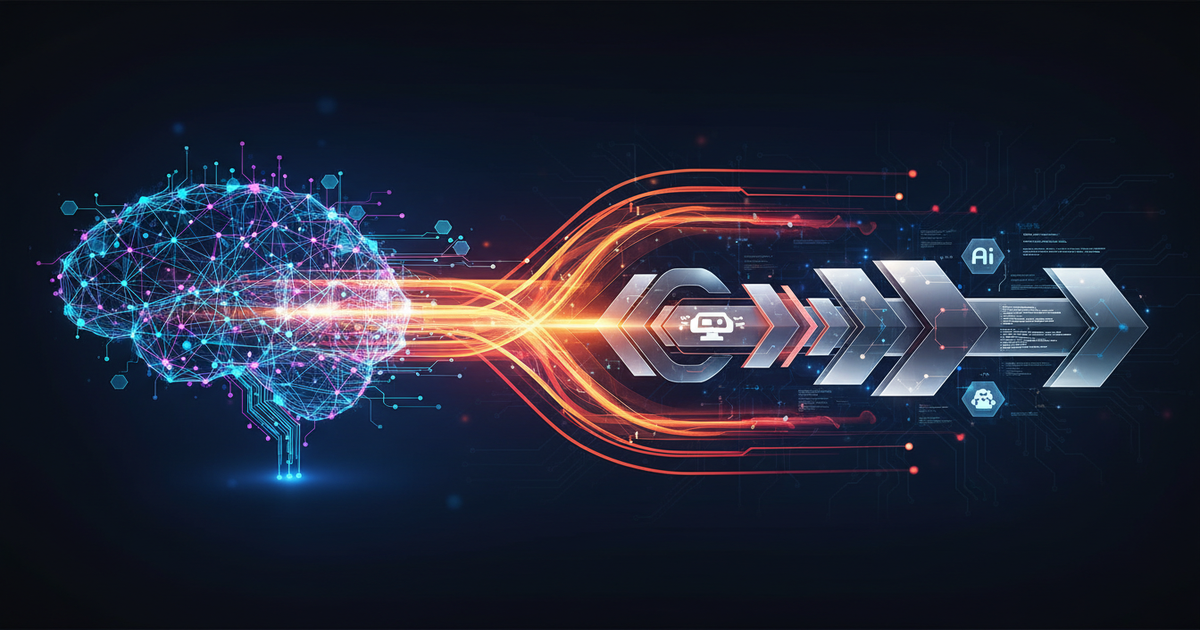
The landscape of software development is constantly evolving, and by 2025, Continuous Integration/Continuous Delivery (CI/CD) pipelines are undergoing a revolutionary transformation. What was once a series of manual or rigidly scripted steps is now becoming an intelligent, self-optimizing ecosystem, thanks to the integration of Artificial Intelligence (AI). If you're involved in DevOps, software engineering, or infrastructure management, understanding this shift isn't just beneficial—it's critical for staying competitive.
Traditional CI/CD, while foundational, often struggles with bottlenecks, false positives, and reactive responses to issues. Imagine a pipeline that can predict failures before they happen, automatically generate optimal test cases, or even self-heal after a deployment hiccup. This isn't science fiction; it's the reality AI is bringing to CI/CD. This article will explore how AI is reshaping deployment pipelines, offering intelligent automation that drives unprecedented efficiency, reliability, and security.
The Dawn of Intelligent Automation in CI/CD
For years, CI/CD has focused on automating repetitive tasks. From compiling code to running tests and deploying artifacts, the goal has been to reduce human intervention and speed up delivery. However, even with extensive automation, pipelines still require significant human oversight for complex decision-making, debugging, and optimization.
This is where AI steps in. By leveraging machine learning (ML) algorithms, natural language processing (NLP), and predictive analytics, AI empowers CI/CD systems to learn from historical data, identify patterns, and make informed decisions autonomously. This moves us beyond mere automation to intelligent automation.
Think about the sheer volume of data generated by your CI/CD tools, logs, metrics, and monitoring systems. AI can process this data at a scale and speed impossible for humans, uncovering insights that lead to proactive interventions rather than reactive fixes. This shift fundamentally changes how we approach software delivery, making it more robust and less prone to human error.
Actionable Takeaway: Start collecting and centralizing all your pipeline data – build logs, test results, deployment metrics, and monitoring data. This data is the fuel for future AI-driven insights.
Key AI Applications Transforming Your Pipeline
AI isn't a silver bullet, but its applications across various CI/CD stages are truly transformative. Let's look at specific areas where AI is making a significant impact in 2025.
Automated Code Review and Quality Gates
Manual code reviews are essential but time-consuming and often inconsistent. AI-powered tools are changing this by analyzing code for quality, security vulnerabilities, and adherence to best practices far more efficiently. ML models, trained on vast codebases, can identify complex patterns indicative of bugs or performance issues that static analysis tools might miss.
- Smart Linting & Static Analysis: Beyond basic syntax checks, AI can learn from previous bugs and suggest refactorings or flag potential issues based on context and project history.
- Security Vulnerability Detection: AI enhances SAST (Static Application Security Testing) by understanding code context and predicting common exploit patterns, reducing false positives and accelerating remediation.
Imagine a system that not only flags a potential memory leak but also suggests the most probable fix based on similar issues resolved in your repository. This significantly speeds up the development cycle and improves code quality from the outset.
Intelligent Test Generation and Optimization
Testing is often the slowest and most resource-intensive part of the pipeline. AI is revolutionizing this by making testing smarter and more targeted.
- Predictive Test Selection: AI can analyze code changes, historical test failures, and impact analysis to determine which tests are most relevant to run, skipping redundant ones. This dramatically reduces test execution time.
- Automated Test Case Generation: Using techniques like fuzzing and generative AI, systems can create new, effective test cases, especially for edge cases that human testers might overlook.
- Smart Test Data Management: AI can generate synthetic, realistic test data on demand, ensuring comprehensive test coverage without compromising sensitive production data.
For example, a major e-commerce platform utilized AI to reduce their regression test suite execution time by 40% while maintaining, and even improving, defect detection rates. This allowed them to deploy multiple times a day instead of weekly.
Actionable Takeaway: Investigate AI-driven test optimization tools that integrate with your existing frameworks. Focus on reducing redundant tests and improving test coverage intelligently.
Predictive Deployment and Rollback Strategies
Deployment is the moment of truth. AI can reduce the risk associated with releases by providing predictive insights and automating intelligent rollback strategies.
- Risk Assessment: ML models can analyze pre-deployment metrics, code changes, and historical deployment success rates to predict the likelihood of a successful deployment. Factors like load on target infrastructure, recent changes in dependent services, and even time of day can be considered.
- Automated Canary Deployments & A/B Testing: AI can monitor the performance of new deployments in real-time, automatically adjusting traffic distribution or initiating rollbacks if predefined anomaly thresholds are breached. This goes beyond simple thresholds by understanding normal system behavior and detecting subtle deviations.
- Root Cause Analysis (RCA) Automation: In case of failure, AI can rapidly sift through logs and metrics to pinpoint the most probable root cause, significantly accelerating MTTR (Mean Time To Recovery).
Consider a scenario where an AI system detects a slight but consistent increase in database latency during a canary release. It can automatically pause the rollout, isolate the new version, and even suggest potential configuration changes based on past incidents, preventing a full outage.
AI-Powered Observability and Feedback Loops
Beyond the pipeline itself, AI is enhancing how we monitor and maintain deployed applications. AIOps (Artificial Intelligence for IT Operations) is becoming an indispensable part of the CI/CD feedback loop.
- Anomaly Detection: AI models continuously learn the baseline behavior of your applications and infrastructure. They can instantly detect deviations that signify a problem, often before it impacts users. This includes subtle changes in performance, error rates, or resource utilization.
- Log and Metric Correlation: With the vast amount of telemetry data, correlating events across different systems is a challenge. AI can automatically identify relationships between disparate logs and metrics, providing a holistic view of an incident.
- Proactive Issue Resolution: By predicting potential issues, AI can trigger automated remediation actions, such as scaling up resources, restarting services, or initiating self-healing scripts. This transforms reactive maintenance into proactive resilience.
This continuous, intelligent feedback loop ensures that the learnings from production environments are fed back into the CI/CD pipeline, allowing for constant optimization and improvement. It closes the loop between development and operations in a truly intelligent manner.
Actionable Takeaway: Integrate AIOps platforms with your CI/CD tools. Focus on leveraging AI for real-time anomaly detection and automated incident response in production environments.
Overcoming Challenges and Adopting Best Practices
While the benefits are clear, integrating AI into CI/CD isn't without its challenges. Data quality, model interpretability, and the need for new skill sets are crucial considerations.
- Data is King: AI models are only as good as the data they're trained on. Ensuring high-quality, relevant, and unbiased data from your pipelines is paramount. Implement robust data governance and cleansing processes.
- Start Small, Scale Gradually: Don't try to overhaul your entire pipeline with AI overnight. Begin with specific, high-impact areas like intelligent testing or predictive risk assessment. Learn from these initial implementations and iterate.
- MLOps Principles: Treat your AI models themselves as critical software components. Apply MLOps practices for versioning, deploying, monitoring, and retraining your AI models within your CI/CD pipeline.
- Human-in-the-Loop: AI should augment, not replace, human expertise. Maintain human oversight for critical decisions, especially in the early stages of adoption. AI can highlight issues, but humans often provide the final judgment and context.
- Security and Ethics: Ensure your AI models are secure and free from bias. Regularly audit your models and data for unintended consequences or vulnerabilities.
By addressing these challenges proactively, you can build a robust, AI-powered CI/CD system that truly delivers on its promise.
The Future Landscape: AI, GitOps, and Cloud Native
Looking further into 2025 and beyond, AI will become an inseparable component of modern deployment strategies. It will seamlessly integrate with evolving paradigms like GitOps, serverless computing, and advanced container orchestration platforms like Kubernetes.
In a GitOps-driven world, AI can monitor Git repositories for configuration drift, suggest optimal infrastructure changes based on observed load patterns, and even automatically generate pull requests for self-healing infrastructure. For serverless architectures, AI will optimize function scaling, cold start predictions, and cost management by analyzing usage patterns.
AI will continue to drive the shift towards truly self-managing and self-healing systems, freeing up engineers to focus on innovation rather than operational toil. The synergy between AI and cloud-native technologies will unlock unprecedented levels of agility and resilience.
Conclusion: Embrace the Intelligent Future of DevOps
AI-powered CI/CD is no longer a futuristic concept; it's a rapidly maturing reality that is fundamentally reshaping how we build, test, and deploy software. By leveraging intelligent automation, you can achieve faster release cycles, higher code quality, enhanced security, and significantly improved operational efficiency.
The journey to an AI-driven pipeline requires strategic planning, a commitment to data quality, and a willingness to embrace new tools and methodologies. However, the competitive advantage gained from predictive insights, automated decision-making, and proactive issue resolution is immense. Start exploring AI solutions for your CI/CD pipeline today, and position your organization at the forefront of intelligent software delivery.
Are you ready to transform your deployment pipelines with the power of AI? The future of DevOps is intelligent, and it's waiting for you to build it.
Comments
Join the discussionNo comments yet. Be the first to comment.