Building Secure AI Pipelines: A DevOps Tutorial to Prevent Deepfake Deployments
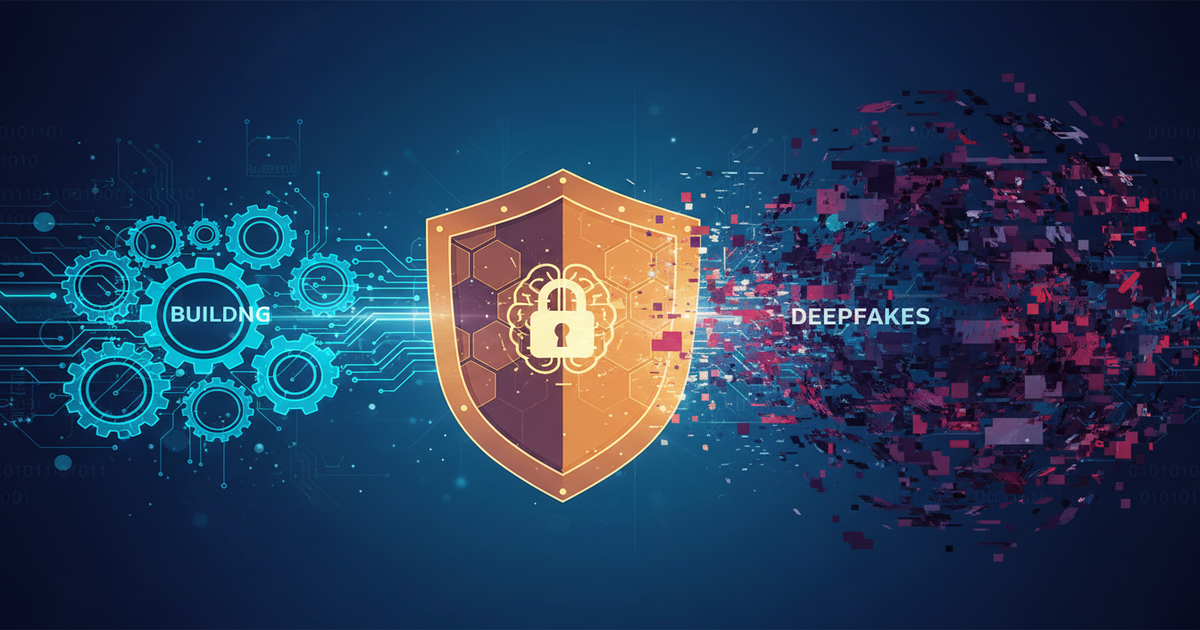
The rapid evolution of Artificial Intelligence has brought unprecedented innovation, but also a darker side: the proliferation of deepfakes. These highly realistic, AI-generated synthetic media pose significant threats, from reputational damage and financial fraud to political destabilization. As we approach 2025, the sophistication of deepfake generation will only increase, making detection and prevention more critical than ever. For organizations leveraging AI, securing your machine learning operations (MLOps) pipelines isn't just a best practice—it's an imperative.
This comprehensive guide will walk you through how to build robust, secure AI pipelines using core DevOps principles, preventing the unintended or malicious deployment of deepfake-generating models or compromised AI assets. You'll learn to leverage CI/CD, containerization, and Infrastructure as Code (IaC) to create a resilient defense against emerging AI threats.
The Evolving Threat Landscape of AI in 2025
By 2025, deepfake technology will be even more accessible and convincing, making it increasingly difficult for human perception and even traditional AI detection methods to differentiate real from fake. Beyond direct deepfake generation, the AI ecosystem faces a broader array of sophisticated threats. Adversarial attacks, where subtle perturbations to input data can trick models into misclassifying or generating malicious outputs, will become more common.
Furthermore, the AI supply chain itself is a critical vulnerability. Compromised open-source libraries, pre-trained models from untrusted sources, or even malicious data injected during data ingestion can lead to models that behave unexpectedly or, worse, become tools for generating deepfakes. Protecting against these evolving threats requires a proactive, end-to-end security strategy baked into your development and deployment processes.
Actionable Takeaway: Assume compromise. Implement a defense-in-depth strategy that spans every stage of your AI pipeline, from data acquisition to model deployment. Regularly update threat models for your AI systems.
DevOps Principles: Your Shield Against Malicious AI
DevOps methodologies, traditionally applied to software development, are perfectly suited to address the unique security challenges of AI pipelines. By integrating security into every phase of the MLOps lifecycle, you can build resilience and detect anomalies early. Here's how core DevOps principles apply:
- Automation: Automate security checks, policy enforcement, and deployments to reduce human error and ensure consistency. This minimizes windows of vulnerability.
- Continuous Integration/Continuous Delivery (CI/CD): Integrate security testing into every commit and deployment. This allows for rapid identification and remediation of vulnerabilities before they reach production.
- Infrastructure as Code (IaC): Define your AI infrastructure (compute, storage, networking) as code, enabling version control, peer review, and automated security policy enforcement. This ensures your environment is configured securely from the start.
- Containerization: Isolate your AI models and their dependencies within secure containers. This provides reproducible environments, simplifies dependency management, and limits the blast radius of potential attacks.
- Monitoring & Observability: Implement comprehensive logging and monitoring to detect unusual behavior, performance degradation, or security incidents in real-time. Quick detection is key to rapid response.
Actionable Takeaway: Treat your AI models, their training data, and the underlying infrastructure with the same, if not greater, security rigor as your most sensitive application code. Security is a shared responsibility across the entire team.
Securing the AI Model Lifecycle: A Multi-Layered Approach
Every stage of your AI model's journey, from raw data to deployed inference, presents a potential attack surface. A robust security strategy requires explicit controls at each layer.
Data Ingestion and Pre-processing
Data is the lifeblood of AI, and its integrity is paramount. Malicious or compromised data can poison your models, leading to unintended and potentially harmful outcomes, including the generation of deepfakes.
- Data Provenance: Implement strict tracking of data origin, transformations, and access logs. Use data versioning tools (e.g., DVC, Git LFS) to maintain an immutable history.
- Validation & Sanitization: Implement robust validation rules and sanitization processes to detect and filter out anomalous or potentially malicious inputs before they enter your training pipeline.
- Access Control: Apply the principle of least privilege to data access. Only authorized personnel and services should have access to sensitive training data.
- Encryption: Encrypt data at rest and in transit to protect against unauthorized access.
Model Training and Versioning
The training phase is where your model learns, and it's a critical point for ensuring integrity and preventing tampering.
- Reproducibility: Ensure that your models can be rebuilt identically from source code and data. This aids in auditing and forensic analysis if a compromise occurs.
- Integrity Checks: Cryptographically hash all model artifacts (weights, configurations) and store these hashes securely in a model registry. Verify these hashes before deployment.
- Secure Training Environments: Conduct training in isolated, monitored environments, ideally within secure containers or virtual machines, with strict network policies.
- Model Registry: Use a secure model registry (e.g., MLflow, Kubeflow Pipelines, specialized cloud services) to store signed, versioned models, along with their metadata and lineage.
Model Deployment and Inference
Deploying a model into production introduces new runtime security considerations, especially for services that might be misused to generate deepfakes.
- Runtime Security: Secure inference endpoints with API gateways, strong authentication, and authorization. Implement rate limiting to prevent abuse.
- Input Validation: Even for deployed models, validate and sanitize incoming inference requests to prevent adversarial attacks or malicious input that could trigger unwanted model behavior.
- Resource Isolation: Deploy inference services within isolated containers (e.g., using Kubernetes) to limit the impact of a compromise and enforce strict resource quotas.
- Secure Communication: Ensure all communication between your application and the inference service is encrypted (TLS/SSL).
Actionable Takeaway: Implement strong access controls, encryption, and rigorous validation at every stage. For model training, prioritize reproducibility and cryptographic integrity checks to ensure trust in your artifacts.
CI/CD for Deepfake Prevention: Hardening Your Pipeline
Your CI/CD pipeline is the nerve center of your development and deployment process. Integrating security throughout this pipeline is your best defense against deepfake deployments.
Automated Code and Model Scans
Automate security scanning at every commit to catch vulnerabilities early.
- Static Application Security Testing (SAST): Integrate tools like Bandit (for Python) or Checkmarx to scan your model code and MLOps scripts for common vulnerabilities.
- Software Composition Analysis (SCA): Use tools like Snyk or OWASP Dependency-Check to identify known vulnerabilities in your open-source libraries and dependencies.
- Model Integrity Scans: Leverage emerging tools and techniques that analyze model weights and architectures for signs of tampering, backdoor injections, or adversarial robustness weaknesses. This might involve statistical analysis or perturbation testing of the model itself.
Container Image Security
Container images are the building blocks of modern AI deployments. Their security is paramount.
- Vulnerability Scanning: Integrate image scanners (e.g., Trivy, Clair, Anchore Engine) into your CI/CD to scan every container image for known vulnerabilities before it's pushed to a registry.
- Image Signing: Implement image signing (e.g., Notary, Cosign with Sigstore) to ensure that only trusted, verified images can be deployed to your production environments.
- Minimal Base Images: Always use minimal, hardened base images to reduce the attack surface. Avoid unnecessary packages and services.
Infrastructure as Code (IaC) Security
Ensure your infrastructure configurations are secure and compliant.
- Policy Enforcement: Use policy-as-code tools like Open Policy Agent (OPA), Checkov, or Terrascan to enforce security policies on your IaC templates (Terraform, CloudFormation, Kubernetes manifests). This prevents insecure configurations from being provisioned.
- Drift Detection: Continuously monitor your deployed infrastructure for any unauthorized changes or deviations from your IaC definitions. Tools like Driftctl can help identify and remediate configuration drift.
Secure Artifact Repositories
Your model and container image repositories are critical assets that must be protected.
- Access Control: Implement granular, role-based access control (RBAC) with strong authentication for all artifact repositories. Follow the principle of least privilege.
- Immutable Storage: Configure your repositories to store artifacts immutably, preventing accidental or malicious modification of stored models or container images.
- Geographic Redundancy: Replicate critical artifacts across multiple secure locations to ensure availability and resilience against regional outages or attacks.
Actionable Takeaway: Automate security checks at every stage of your CI/CD pipeline. From code commits to container builds and infrastructure provisioning, integrate tools that scan, sign, and enforce policies automatically.
Runtime Monitoring, Anomaly Detection, and Incident Response
Even with the most robust CI/CD pipeline, threats can emerge at runtime. Continuous monitoring and a strong incident response plan are essential for detecting and mitigating deepfake-related incidents.
- Continuous Monitoring: Implement comprehensive monitoring for your deployed AI models. Track input patterns, output characteristics, inference latency, resource utilization, and error rates. Look for deviations from expected behavior.
- Anomaly Detection: Leverage AI-powered monitoring solutions that can detect unusual inference requests or model outputs indicative of adversarial attacks, data poisoning, or even a model being coerced into generating deepfakes. For instance, a sudden surge in specific types of requests or anomalous output patterns could be a red flag.
- Auditing and Logging: Maintain detailed, tamper-proof logs for all AI pipeline activities, including data access, model training runs, deployments, and inference requests. These logs are invaluable for forensic analysis.
- Automated Rollbacks: Design your deployment strategy to allow for rapid, automated rollbacks to a known good version of your model or infrastructure if a deepfake deployment or compromise is detected.
- Incident Response Plan: Develop a clear, well-rehearsed incident response plan specifically for AI security incidents. This plan should outline detection, containment, eradication, recovery, and post-incident analysis steps.
Actionable Takeaway: Invest in real-time monitoring and anomaly detection for your deployed AI models. Have a clear incident response plan ready to execute, including automated rollback procedures, to minimize the impact of any security breach.
Conclusion
Building secure AI pipelines is no longer optional; it's a fundamental requirement for any organization leveraging artificial intelligence. The threat of deepfake deployments and other AI-specific attacks will only intensify by 2025, demanding a proactive and integrated security approach. By adopting DevOps principles—automation, CI/CD, IaC, and containerization—you can establish a resilient framework that prevents malicious AI from reaching production.
Protecting your AI assets means safeguarding your reputation, ensuring data integrity, and maintaining public trust in your technology. Start by assessing your current MLOps security posture, then systematically integrate these practices into your development lifecycle. Invest in the right tools, upskill your teams, and foster a security-first culture. The future of AI is promising, but its responsible and secure development hinges on the robust pipelines you build today. Don't wait for a deepfake incident to act—secure your AI pipelines now.