Accelerating Your SAP BusinessObjects to SAP Analytics Cloud Migration: A 2025 Guide
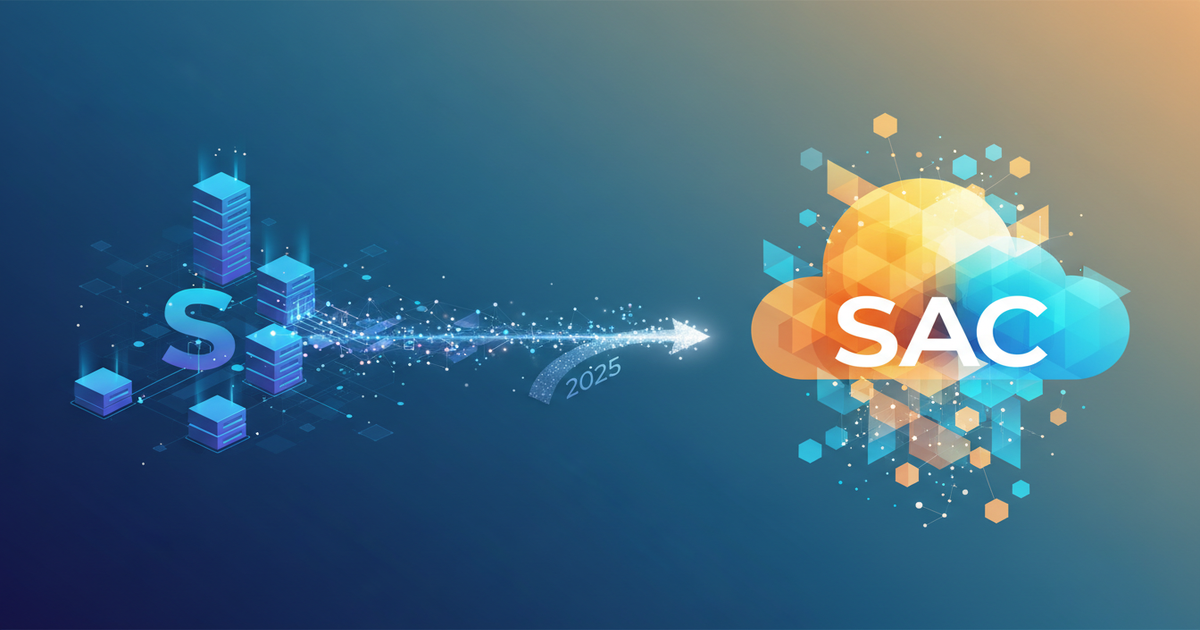
The landscape of business intelligence is evolving at an unprecedented pace. If your organization still relies heavily on SAP BusinessObjects (BoBJ), you're likely feeling the pressure to modernize. The year 2025 marks a critical juncture, with mainstream maintenance for older BoBJ versions nearing its end, making the shift to SAP Analytics Cloud (SAC) not just an upgrade, but a strategic imperative. This guide will walk you through accelerating your migration, leveraging cloud-native technologies on AWS, Azure, and GCP.
Are you ready to unlock the full potential of your data with advanced analytics, planning, and predictive capabilities? This isn't just about moving data; it's about transforming how your business makes decisions.
Why 2025 is the Critical Year for SAC Migration
SAP BusinessObjects has served as a robust BI platform for decades, but its capabilities are increasingly outpaced by modern cloud-native solutions. As we approach 2025, several factors make the migration to SAP Analytics Cloud urgent and highly beneficial.
First, end of mainstream maintenance for older BoBJ versions means reduced support, potential security vulnerabilities, and a lack of new features. Staying on an unsupported platform introduces significant risks and technical debt.
Second, SAC offers a unified experience for business intelligence, planning, and predictive analytics, all within a single, cloud-native environment. This integration streamlines workflows, enhances collaboration, and provides a holistic view of your business performance. You gain access to real-time insights that BoBJ simply cannot deliver with the same agility.
Third, the competitive landscape demands data-driven agility. SAC's powerful in-memory capabilities, augmented analytics features, and seamless integration with other SAP and non-SAP data sources empower faster, more accurate decision-making. Imagine the advantage of predicting market trends or optimizing supply chains with AI-powered insights.
Actionable Takeaway: Assess your current BoBJ version and support status. Begin immediate planning for migration to mitigate risks and capitalize on SAC's advanced features.
Navigating the Cloud Landscape: AWS, Azure, and GCP for SAC
Migrating to SAP Analytics Cloud inherently means embracing the cloud. While SAC is a SaaS offering, understanding the underlying cloud infrastructure options for your data sources and complementary services is crucial. AWS, Azure, and GCP each offer robust platforms that can host your data lakes, data warehouses, and integration services, forming a powerful ecosystem around SAC.
AWS: Scalability and Extensive Services
Amazon Web Services (AWS) provides a vast array of services ideal for supporting SAC migrations. You can leverage Amazon S3 for cost-effective data storage, Amazon Redshift for high-performance data warehousing, and AWS Glue for ETL operations. For real-time data ingestion, Amazon Kinesis can be invaluable. Its global reach and mature ecosystem make it a strong contender for enterprises prioritizing scalability and a broad service portfolio.
Azure: Seamless Microsoft Integration
Microsoft Azure is a natural choice for organizations already heavily invested in the Microsoft ecosystem. Azure Data Lake Storage, Azure Synapse Analytics, and Azure Data Factory offer powerful capabilities for data management and integration. Azure's strong focus on hybrid cloud scenarios can also be beneficial if you plan a phased migration or have significant on-premises data dependencies. The tight integration with Microsoft 365 and other Microsoft products can simplify user management and access.
GCP: AI/ML and Advanced Analytics Focus
Google Cloud Platform (GCP) excels in its advanced analytics and machine learning capabilities. BigQuery, GCP's fully managed, serverless data warehouse, is renowned for its speed and cost-effectiveness at scale. Dataflow for stream and batch processing, and Vertex AI for integrated ML development, provide cutting-edge tools for enriching your data before it reaches SAC. If your strategy leans heavily into AI-driven insights, GCP offers a compelling platform.
Actionable Takeaway: Evaluate your existing cloud strategy, data residency requirements, and skill sets when choosing a cloud provider. Consider a hybrid approach if necessary, integrating on-premises data with cloud services.
Strategic Migration Phases: A Roadmap to Success
A successful SAP BusinessObjects to SAP Analytics Cloud migration requires a structured, phased approach. Rushing this process can lead to significant headaches and cost overruns. Here are the key phases you should follow:
- Discovery and Assessment: Begin by cataloging your existing BoBJ universe. Identify all reports, dashboards, data sources, and user groups. Determine report usage frequency and complexity. This phase helps you prioritize what to migrate first and what to archive or rebuild.
- Planning and Design: Based on your assessment, define the target architecture. This includes data integration strategies (e.g., direct connections, data warehousing), security models, and SAC content structure. Create a detailed project plan with timelines, resource allocation, and clear success metrics.
- Proof of Concept (PoC) / Pilot: Start with a small, representative set of reports or a specific business unit. This PoC validates your design, identifies potential challenges early, and allows your team to gain hands-on experience with SAC. It's a crucial learning phase.
- Data Preparation and Integration: Cleanse, transform, and load your data into the chosen cloud data platform (AWS, Azure, GCP) or directly connect to SAC. Establish robust data governance and quality processes. Tools like SAP Data Intelligence or cloud-native ETL services are vital here.
- Content Migration and Development: Rebuild or migrate your critical reports, dashboards, and analytics applications in SAC. Leverage SAC's best practices for data modeling and visualization. Focus on optimizing performance and user experience.
- Testing and Validation: Thoroughly test all migrated content for accuracy, performance, and security. Involve end-users in user acceptance testing (UAT) to ensure the new environment meets their needs and expectations.
- Training and Rollout: Develop comprehensive training programs for different user groups. A smooth rollout requires effective change management and communication. Phased rollouts can minimize disruption.
- Post-Migration Optimization: After go-live, continuously monitor performance, gather feedback, and iterate. Explore new SAC features, optimize data models, and expand your analytics capabilities.
Actionable Takeaway: Don't underestimate the discovery phase. A thorough understanding of your current state is the bedrock of a successful and efficient migration.
Overcoming Common Migration Challenges
While the benefits of SAC are clear, the migration journey isn't without its hurdles. Being prepared for common challenges can significantly smooth the process.
- Data Governance and Quality: Legacy BoBJ environments often accumulate data inconsistencies. Use the migration as an opportunity to implement stronger data governance policies and clean your data. This ensures the integrity of your new SAC insights.
- Security and Compliance: Migrating sensitive data to the cloud requires a meticulous approach to security. Ensure your cloud environment and SAC configurations comply with industry regulations and internal policies. Leverage cloud-native security features and SAC's robust security model.
- Skill Gaps: Your existing BoBJ team might lack expertise in SAC, cloud platforms, or modern data engineering. Invest in training and upskilling your team, or consider bringing in external experts to bridge the knowledge gap.
- Complex Report Conversion: Not all BoBJ reports can be directly migrated. Some will need to be rebuilt from scratch, especially highly customized or complex ones. Prioritize based on business value and usage.
- Performance Optimization: Cloud analytics requires careful consideration of data modeling and query optimization. Poorly designed data models can lead to slow performance. Leverage SAC's in-memory capabilities and optimize data ingestion processes.
Actionable Takeaway: Proactively address potential skill gaps through training programs or strategic hires. This investment will pay dividends in the long run.
Best Practices for an Accelerated Migration
To truly accelerate your SAP BusinessObjects to SAP Analytics Cloud migration, integrate these best practices into your strategy.
- Phased Approach with Quick Wins: Instead of a big-bang migration, identify high-impact, low-complexity reports or dashboards that can be migrated quickly. This builds momentum, demonstrates early value, and allows your team to gain experience.
- Leverage Automated Migration Tools: While no tool offers a 100% automated conversion for all BoBJ content, solutions from SAP (e.g., SAP BW/4HANA migration tools, content network) and third-party vendors can automate parts of the process, such as metadata extraction or report conversion for simpler cases. Investigate these to reduce manual effort.
- Embrace Cloud-Native Integration: Don't just lift and shift your data. Integrate SAC with cloud-native services on AWS, Azure, or GCP for enhanced data processing, machine learning, and scalability. For example, use cloud-native ETL for data pipelines or serverless functions for custom data transformations.
- User-Centric Design: Involve end-users throughout the design and testing phases. Ensure the new SAC environment is intuitive, performant, and meets their specific analytical needs. A positive user experience drives adoption.
- Strong Change Management: Communicate the benefits of SAC clearly and frequently. Provide ample training and support. Address user concerns proactively to ensure a smooth transition and high adoption rates.
Actionable Takeaway: Prioritize high-value content for early migration. This strategy provides immediate business impact and builds internal confidence in the new platform.
Conclusion: Your Future in Cloud Analytics is Now
The migration from SAP BusinessObjects to SAP Analytics Cloud is more than a technical upgrade; it's a strategic move to position your organization for future success. By embracing cloud-native technologies on AWS, Azure, or GCP, you unlock a world of real-time insights, advanced planning, and predictive capabilities that drive competitive advantage.
Don't let the approaching 2025 deadline catch you unprepared. Start planning your accelerated SAC migration today. Embrace this opportunity to modernize your analytics landscape, empower your users, and transform your business into a truly data-driven enterprise. The future of intelligent enterprise is here, and it's in the cloud.
Call to Action: Ready to accelerate your SAP BusinessObjects to SAP Analytics Cloud migration? Contact our experts for a personalized assessment and roadmap to transform your analytics capabilities!