Building Intelligent Mobile Apps: Digital Twin & AI for Real-time Interactions in 2025
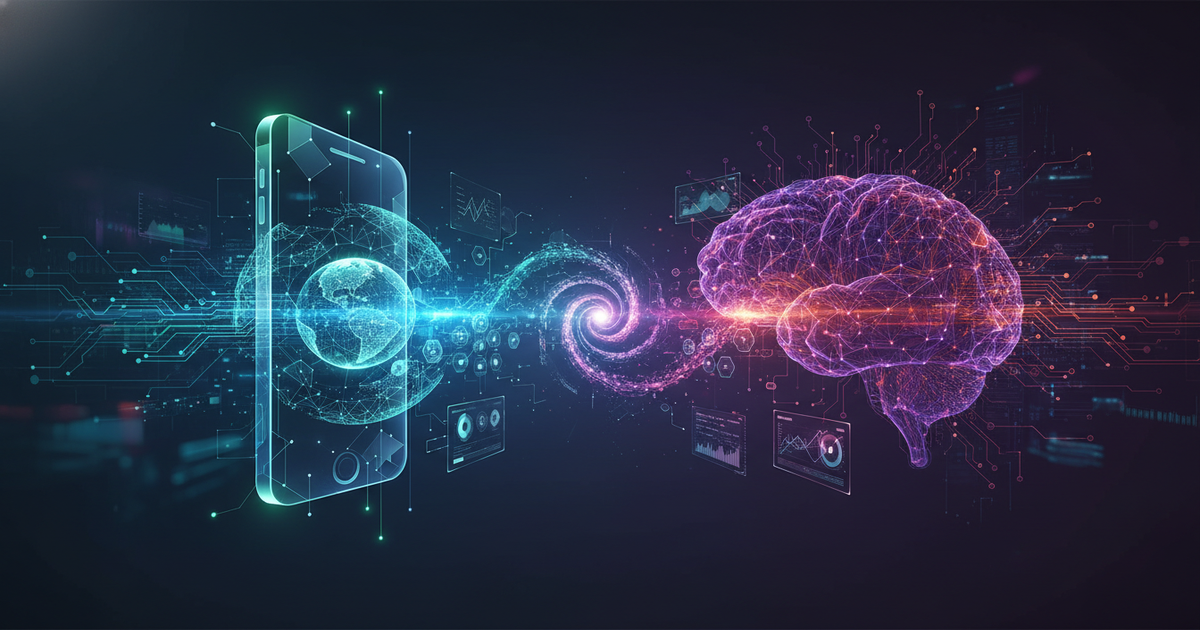
Imagine a world where your mobile device doesn't just show you data, but truly understands and interacts with the physical world around it in real-time. This isn't a futuristic fantasy; it's the imminent reality of 2025, driven by the powerful convergence of Digital Twin technology and Artificial Intelligence in mobile applications. For developers like you, this represents a monumental shift, opening doors to unprecedented levels of intelligence, personalization, and operational efficiency across iOS, Android, and cross-platform ecosystems. Are you ready to build the next generation of intelligent mobile experiences?
The Convergence of Digital Twin and AI in Mobile Development
At its core, a Digital Twin is a virtual replica of a physical object, process, or system. It's fed real-time data from its physical counterpart, enabling accurate simulations, monitoring, and predictions. When combined with Artificial Intelligence (AI), particularly machine learning algorithms, this virtual model gains the ability to learn, reason, and even make autonomous decisions, providing profound insights.
In 2025, the proliferation of advanced sensors in mobile devices, coupled with ubiquitous high-speed connectivity (5G/6G) and increasingly powerful edge computing capabilities, makes this integration not just possible but practical. Your mobile app can become the intuitive interface to complex physical systems, offering real-time situational awareness and actionable intelligence directly in the palm of your hand.
This synergy allows mobile apps to move beyond mere data consumption to become proactive, predictive, and truly intelligent tools that mirror and influence the real world.
Why Now? The Driving Forces of 2025
Several factors are accelerating this trend. Firstly, the maturity of cloud-based Digital Twin platforms like Azure Digital Twins and AWS IoT TwinMaker simplifies the creation and management of virtual models. Secondly, advancements in on-device AI inference, powered by frameworks like TensorFlow Lite and Core ML, enable low-latency processing and decision-making without constant cloud reliance. Finally, user expectations for personalized, context-aware experiences are at an all-time high.
Architecting for Real-time Interactions
Building intelligent mobile apps with Digital Twin and AI requires a robust architectural approach. The goal is seamless, low-latency data flow between the physical asset, its digital twin in the cloud, and your mobile application.
Data Flow and Integration
- Sensor Data Collection: Mobile devices (iOS/Android) act as critical data collection points, utilizing their built-in sensors (GPS, accelerometer, gyroscope, camera, microphone) or connecting to external IoT devices via Bluetooth Low Energy (BLE) or Wi-Fi.
- Edge Pre-processing: On-device AI/ML models can perform initial data filtering, anomaly detection, or feature extraction, reducing the data sent to the cloud and improving response times.
- Cloud-based Digital Twin Platform: This is where the virtual model resides. Data from mobile and other sources is ingested, processed, and used to update the twin's state in real-time. This platform also hosts more complex AI models for deeper analysis and predictive capabilities.
- Mobile App Interface: Your app consumes the synchronized state from the Digital Twin, visualizes it, and allows users to interact with or control the physical asset indirectly. It can also send commands back to the twin, which then propagates them to the physical system.
Key Architectural Components:
- Message Brokers: MQTT is a lightweight, publish-subscribe protocol ideal for IoT and mobile communication, ensuring efficient data exchange.
- Cloud Computing: Platforms like AWS, Azure, and Google Cloud provide the scalable infrastructure for Digital Twin services, data storage, and advanced AI/ML capabilities.
- Edge Computing: Leveraging mobile device processing power reduces latency and enhances privacy by keeping sensitive data localized when possible.
Practical Applications and Transformative Use Cases
The integration of Digital Twin and AI in mobile apps isn't just theoretical; it's already creating tangible value across various industries. Here's where you can make a real impact:
Smart Manufacturing: Imagine a factory floor supervisor using an iPad app to monitor the digital twin of a production line. AI analyzes real-time sensor data from machinery, predicting potential failures before they occur. The app alerts the supervisor, recommending proactive maintenance schedules, preventing costly downtime. This leads to predictive maintenance and optimized operations.
Smart Cities & Infrastructure: Mobile apps could provide citizens with real-time insights into urban environments. A Digital Twin of a city's public transport system, powered by AI, could show the most efficient routes, predict traffic congestion based on current events, or even guide autonomous delivery robots. For city planners, this offers a powerful tool for resource optimization and emergency response.
Healthcare & Patient Monitoring: In 2025, a patient's mobile device could connect to a wearable that feeds data into their personalized Digital Twin. AI algorithms constantly monitor vital signs, activity levels, and medication adherence. If anomalies are detected, the app could alert both the patient and their care team, enabling proactive health management and remote patient monitoring.
Personalized Retail Experiences: Picture a shopping app that creates a Digital Twin of your preferences, past purchases, and even your physical dimensions (via mobile scanning). AI then uses this twin to offer highly personalized product recommendations, virtual try-ons, and in-store navigation that adapts to real-time inventory and promotions. This enhances customer engagement and conversion rates.
Key Technologies and Frameworks for Development
To bring these intelligent experiences to life, you'll need to leverage a combination of mobile-specific and cloud-agnostic technologies.
Mobile Operating System Capabilities
- iOS: Utilize Core ML for on-device AI inference, ARKit for augmented reality overlays of Digital Twin data, and HealthKit/CareKit for health data integration.
- Android: Leverage TensorFlow Lite for on-device machine learning, ARCore for augmented reality, and various sensor APIs for robust data collection.
Cross-Platform Frameworks
For broader reach and code reusability, Flutter and React Native are excellent choices. Both offer robust performance and access to native device features, making them suitable for complex Digital Twin and AI integrations. They can interface with native ML models and cloud APIs efficiently.
Cloud and AI/ML Platforms
- Digital Twin Platforms: Azure Digital Twins, AWS IoT TwinMaker, and Google Cloud IoT Core provide the backbone for creating, managing, and interacting with your digital replicas.
- AI/ML Services: Services like AWS SageMaker, Azure Machine Learning, and Google AI Platform offer powerful tools for training, deploying, and managing your AI models in the cloud.
- Data Streaming & Storage: Apache Kafka, Azure Event Hubs, and AWS Kinesis are crucial for real-time data ingestion, while databases like MongoDB, DynamoDB, or PostgreSQL handle structured and unstructured data storage.
Overcoming Challenges and Best Practices
While the potential is immense, integrating Digital Twin and AI presents unique challenges. Addressing them proactively is key to successful deployment.
- Data Privacy and Security: Handling vast amounts of real-time data, often personal or sensitive, demands stringent security measures. Implement end-to-end encryption, adhere to regulations like GDPR and CCPA, and design with privacy by design principles.
- Latency and Connectivity: Real-time interactions depend on minimal latency. Optimize data payloads, leverage edge computing for immediate responses, and design for offline capabilities where continuous connectivity isn't guaranteed.
- Scalability: Digital Twins can grow exponentially with the number of physical assets. Ensure your cloud infrastructure and database solutions can scale horizontally to handle increasing data volumes and user traffic.
- Model Optimization for Mobile: On-device AI models must be lightweight and efficient. Use quantization, pruning, and model compression techniques to ensure smooth performance without draining battery life.
Best Practice: Start with a minimum viable product (MVP). Focus on a single, impactful use case, gather feedback, and iterate. Incremental development helps manage complexity and demonstrates value quickly.
The Future is Intelligent and Interconnected
The integration of Digital Twin and AI in mobile applications is not just an evolutionary step; it's a revolutionary leap forward. By 2025, your mobile device will be more than just a communication tool; it will be a dynamic, intelligent window into the physical world, offering unprecedented control, insight, and personalized experiences.
As a mobile developer, you are at the forefront of this transformation. Embrace these technologies, experiment with the frameworks, and start building the intelligent, real-time applications that will define our future. The opportunity to create truly impactful and intuitive mobile experiences is here. Are you ready to shape it?